Myanmar's Independence Day: A Testament to National Resilience and Enduring Sovereignty

292
By Hsu (NP News) - Jan 2
In the heart of Southeast Asia, where venerable pagodas ascend toward the heavens and sinuous rivers traverse verdant landscapes, the Republic of the Union of Myanmar observes one of its most venerated national holidays: Independence Day on January 4. This auspicious occasion commemorates the historic declaration of sovereignty in 1948, when Myanmar—formerly known as Burma—severed ties with British colonial administration after more than six decades of subjugation. Amidst the nation's frequent prominence in international discourse owing to its multifaceted challenges, Independence Day serves as an illuminating emblem of fortitude, collective national pride, and aspirational hope, extending an invitation to the global community to appreciate Myanmar's indomitable spirit.
Historical Foundations of Independence
The narrative of Myanmar's independence constitutes a profound saga of steadfast perseverance, astute diplomacy, and resolute determination. British imperial forces initiated the colonization of Burma in the late 19th century, methodically annexing its territories through a series of three Anglo-Burmese Wars spanning 1824 to 1885. Subsequent decades witnessed a profound transformation under British stewardship: Yangon, the former capital, underwent a metamorphosis with the erection of imposing colonial edifices; and invaluable resources such as teak timber and rice were systematically extracted to sustain the British Empire. Beneath this ostensibly progressive facade, however, latent discontent proliferated. Burmese scholars, Buddhist monks, and students merged into united movements, deriving impetus from contemporaneous global endeavors, notably India's campaign of non-violent resistance spearheaded by Mahatma Gandhi.
The nationalist fervor crystallized during the 1930s, propelled by luminaries such as U Ottama, a pioneering monk-orator, and Saya San, whose galvanizing peasant rebellion from 1930 to 1931 was ruthlessly suppressed by colonial authorities. The cataclysm of World War II precipitated an acceleration toward autonomy. Japanese forces invaded Burma in 1942, proffering ostensible liberation yet imposing a marionette regime via the Burma National Army under the command of the youthful General Aung San. Disillusioned by Japanese authoritarianism, Aung San realigned with Allied powers in 1945. In the war's aftermath, he engaged in pivotal negotiations with British Prime Minister Clement Attlee, culminating in the 1947 Panglong Agreement. This accord pledged administrative autonomy to ethnic minorities, including the Shan, Kachin, and Karen peoples, thereby laying the groundwork for a federated union.
Tragedy imperiled these advancements on July 19, 1947, when political adversaries assassinated Aung San and six of his cabinet ministers in Rangoon (present-day Yangon). Undaunted, his devoted successor, U Nu, propelled the nation toward fruition. At precisely 4:20 a.m. on January 4, 1948—a moment deemed propitious by Burmese astrological traditions—Prime Minister U Nu formally proclaimed independence. Thus, the Union of Burma materialized as a democratic republic, with Yangon designated as its vibrant capital. This arduously attained liberty established the framework for a federal structure, albeit one perpetually strained by ethnic discord and recurrent military interventions in subsequent decades.
Nationwide Commemorations: Dignity and Reflection
Contemporary observances of Independence Day interlace historical reverence with communal solemnity, metamorphosing urban centers, provincial towns, and rural villages into vibrant mosaics of patriotism. Ceremonies commence at dawn across the republic, meticulously recapitulating the 1948 declaration. In Yangon, the preeminent festivities convene at the resplendent Shwedagon Pagoda, where multitudes assemble beneath radiant floodlights. Saffron-clad monks intone sacred incantations, harmonizing with the resonant peals of colossal bells, evoking a profound spiritual ambiance.
Distinct from the ostentatious military parades characteristic of many independence celebrations, Myanmar's proceedings embody characteristic restraint and introspection. The principal official rite transpires in Nay Pyi Taw, the meticulously planned administrative capital. There, the national flag ascends the mast at City Hall concomitant with the broadcast of the President's address, which acknowledges ancestral sacrifices while articulating visions for national cohesion and advancement. A ceremonial 11-gun salute reverberates through the city, symbolizing tribute to each of the nation's principal ethnic states and regions.
Community and Cultural Expressions
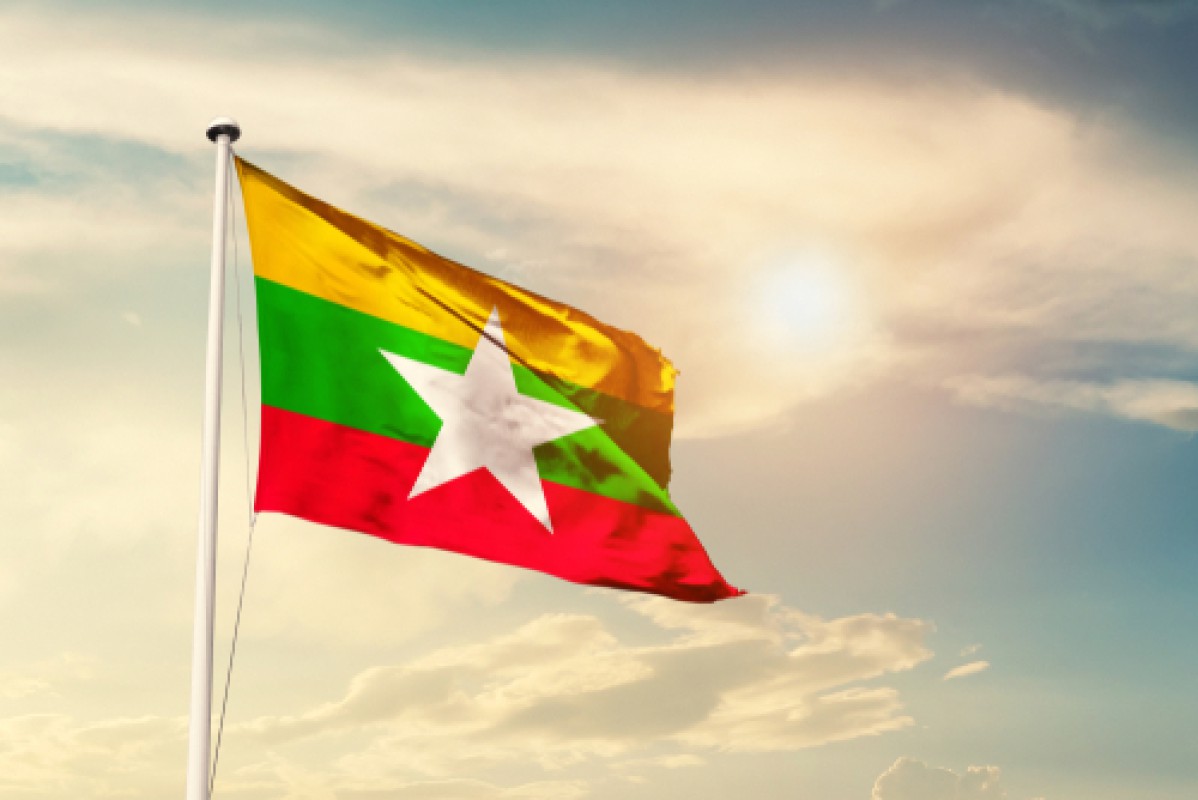
The most affecting vignettes unfold within local communities. At the Martyrs’ Mausoleum in Yangon—proximate to the site of Aung San's martyrdom—dignitaries, foreign diplomats, and ordinary citizens deposit wreaths in contemplative silence, the atmosphere covered with veneration. Public edifices and private residences proudly display the tricolor ensign of yellow, green, and red. Indigenous pwe festivals animate the proceedings, showcasing anyein satirical dance-dramas and yodaya classical musical ensembles. Monasteries emerge as focal points, receiving offerings from devotees who honor national progenitors.
Familial gatherings underscore the day's intimacy, with elders imparting oral histories of the liberation struggle to attentive youth. “Independence Day evokes the valor of our forebears,” remarks Daw Khin Mar, a pedagogue from Mandalay. “We collectively prepare mont lone yay paw—sticky rice balls—a modest ritual that exemplifies the sweetness derived from harmonious collaboration.” A pivotal ritual graces Yangon's 220-foot Independence Column, an obelisk inaugurated in 1948. The Head of State delivers a nationwide address, contemplating Aung San's legacy and advocating reconciliation.
Regional Diversity and International Resonance
Regional variations infuse the observances with distinctive cultural inflections. In Mandalay, the erstwhile royal seat, caparisoned elephants procession through the moated palace precincts, evoking imperial grandeur, while Naga dancers from upland enclaves execute intricate routines adorned in feathered regalia, acknowledging ethnic contributions to the independence odyssey. Nay Pyi Taw mounts grandiose military exhibitions, parading armored vehicles and ordnance to affirm the armed forces' custodial role in territorial integrity.
A Message to the World: Resilience and Identity
For a global audience, Myanmar’s Independence Day serves as a reminder of the country’s enduring identity. Despite the challenges of the modern era, the celebration of January 4 remains a unifying force. It is a day when the diverse ethnic groups of the "Golden Land" reflect on their shared history and their collective hope for a peaceful, prosperous future.
The resilience of the Myanmar people—their ability to find joy in traditional games and draw strength from their deep heritage—is what truly defines the nation. To understand Myanmar, one must look past the headlines and witness the unyielding community spirit that thrives on its independence day.